What Do I Wish I Knew Before Buying My First Business?
Buying your first business is one of the most consequential decisions you’ll ever make. It’s also one of the loneliest. There’s no orientation packet, no onboarding buddy, and no HR department to call when things go sideways.
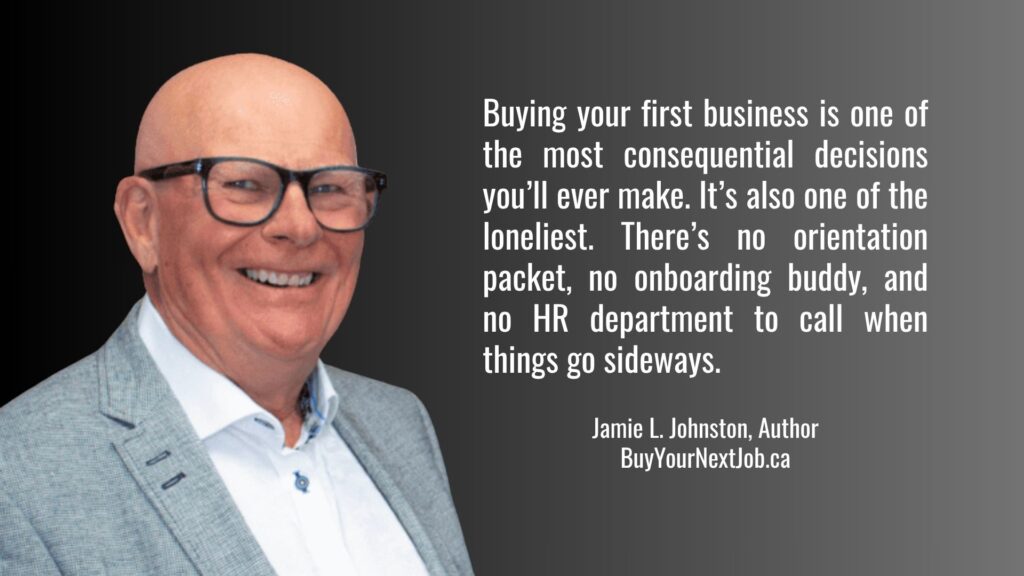
Jamie L. Johnston has bought, operated, and sold multiple businesses over several decades. Some were home runs. Others were expensive lessons. In Own Your Next Job, he shares both — with a candour that’s rare in business books.
Here are some of the key lessons that come up again and again.
- Partnerships almost always fail
This might be the most controversial piece of advice in the book — and the one Jamie feels most strongly about. Own 100%.
Partnerships feel safe at the start. You split the risk, share the workload, complement each other’s skills. But over time, differences in work ethic, risk tolerance, and vision create friction that’s almost impossible to resolve. When a partnership breaks down, the business often breaks with it.
If you need expertise, hire it. If you need capital, borrow it. But own the business outright. - Due diligence is where the deal is won or lost
The excitement of finding a business can blind you to its problems. Don’t let it. The due diligence phase — examining financials, contracts, customer concentration, employee agreements, legal exposure, and physical assets — is where you discover what you’re really buying.
Jamie includes a comprehensive due diligence checklist in the appendix of the book. Use it. Every item on that list exists because someone, somewhere, learned the hard way. - The seller’s motivation tells you everything.
Why is the owner selling? This is the most important question you’ll ask, and you should keep asking it in different ways until you get a real answer.- Retirement — usually genuine, usually means a well-run business
- Burnout — understandable, but ask what’s causing it
- Want to pursue other opportunities — Dig deeper. Often means the business has problems they’re tired of solving.
- Health issues — genuine, but may mean deferred maintenance on the business
- The first 90 days determine everything
When you take over a business, the employees, customers, and suppliers are all watching to see what kind of owner you’ll be. These first three months set the tone for everything that follows.
Jamie’s advice: change nothing for the first 90 days. Listen, learn, understand why things are done the way they’re done. Earn trust before you start making changes. The previous owner built something that works. Respect that before you “improve” it. - Structure matters more than you think
How you buy the business — asset purchase vs. share purchase, personal ownership vs. Holdco, financing structure — has massive tax implications and affects your ability to build long-term wealth.
The Holdco chapter in Own Your Next Job is one of the most practical explanations of corporate structure you’ll find outside a CPA’s office. Get this right from the beginning. Restructuring later is expensive. - You don’t need to know the industry
This surprises many first-time buyers. You don’t need to be an expert plumber to buy a plumbing company. You need to be a competent manager who can lead people, read financials, and make good decisions. The technical expertise already exists in the staff.
What you bring — leadership, financial literacy, and strategic thinking — is exactly what most small businesses lack as they grow beyond the founder’s capacity.
Start with the playbook
Jamie wrote Own Your Next Job because he didn’t have one when he started. Every lesson in the book was learned through experience — often expensive experience. You don’t have to repeat his mistakes. But you do have to do the work.